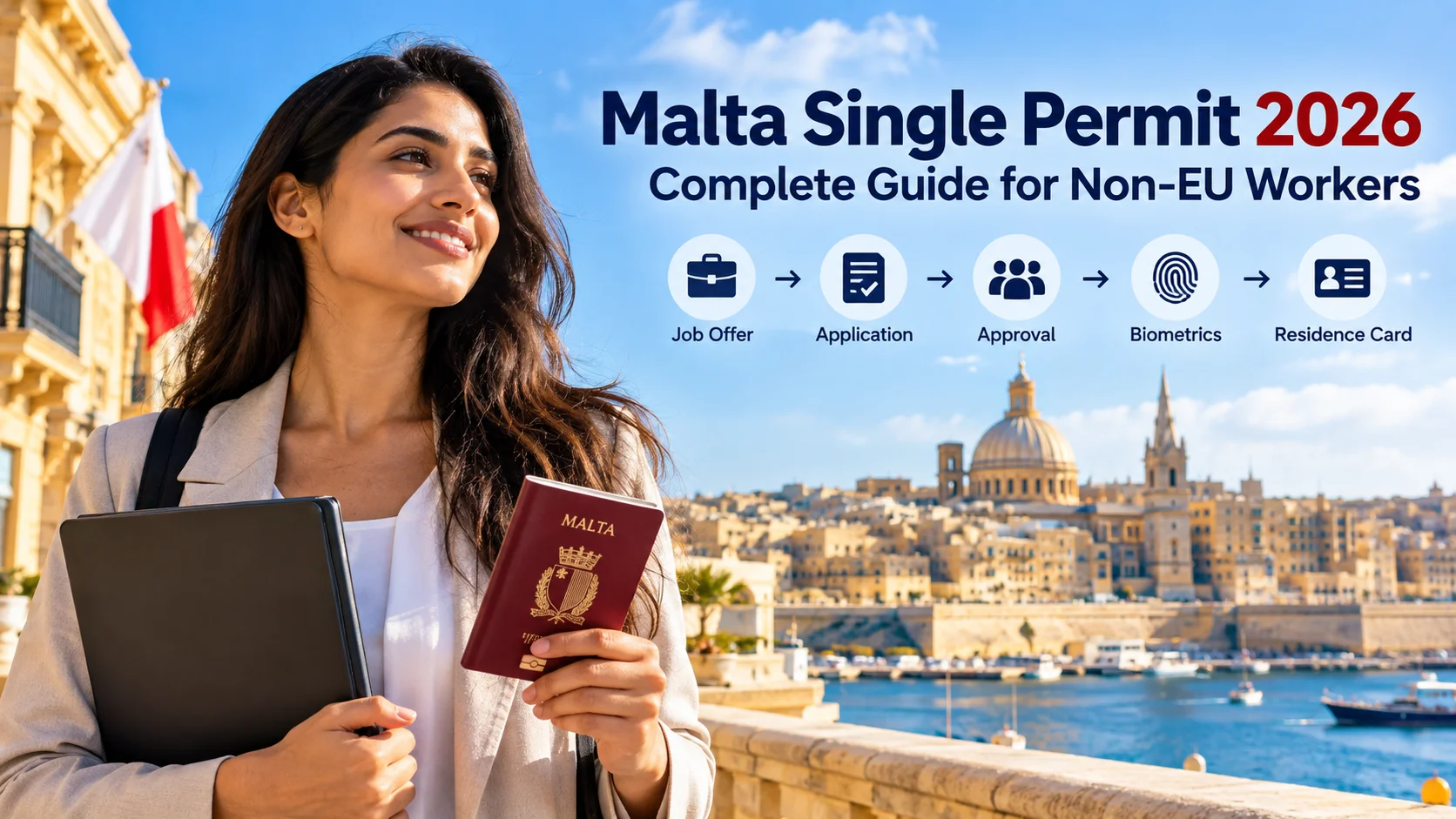
Malta Single Permit 2026 rules are essential to understand if you are a non-EU citizen planning to live and work in Malta. The Single Permit allows eligible third-country nationals (TCNs) to legally reside and work in Malta for a specific employer and approved job.
But the process has changed considerably in recent years.
In 2026, first-time applicants face additional requirements, including Malta’s Pre-Departure Course, while employers also have new recruitment and vacancy-advertising obligations.
This guide explains how the Malta Single Permit works in 2026, who can apply, what documents are normally required, how much it costs, how long processing can take, and what happens after approval.
Important: Immigration rules and document requirements can change. Always check the latest requirements published by Identità and other Maltese authorities before submitting an application.
What Is the Malta Single Permit 2026?
The Single Permit is Malta’s combined residence and employment permit for eligible third-country nationals.
Instead of having completely separate procedures for permission to work and permission to reside in Malta, the Single Permit procedure combines the employment licence and residence permit into one application process.
It is generally intended for employment lasting more than six months.
The permit is issued for a particular employment situation. It does not give you unrestricted access to Malta’s labour market.
In practical terms, your permit is connected to:
- your employer;
- your approved job or designation;
- your period of employment; and
- your legal residence in Malta.
You cannot simply use the same Single Permit to start working for another company.
Who Can Apply for a Malta Single Permit?
The Single Permit is primarily available to third-country nationals, meaning people who are not citizens of the EU, EEA or Switzerland, who have received an eligible job offer from an employer operating in Malta.
The prospective employer must also be registered with Jobsplus.
One point causes a lot of confusion:
The employee does not normally submit the application alone.
The application is initiated and submitted online by the prospective Maltese employer on behalf of the worker.
After the employer starts the application, the employee is involved in confirming information and completing the required steps.
Depending on the circumstances, an application can be made while the worker is outside the Schengen Area or while the person has the required legal immigration status in Malta.
Having a job offer by itself does not mean that you already have permission to work.
The 2026 Pre-Departure Course
This is one of the biggest changes that new applicants need to understand.
Malta introduced a Pre-Departure Course for first-time Single Permit applicants in 2026.
The purpose is to prepare incoming workers for living and working in Malta and to confirm basic knowledge relating to the workplace and integration.
The programme includes areas such as:
- living and working in Malta;
- rights and obligations at work;
- basic integration and cultural awareness; and
- assessments connected to the course.
For certain sectors, additional sector-specific requirements may also apply.
From 1 March 2026, Identità began verifying the relevant Pre-Departure Course certification as part of applicable applications.
This means first-time applicants should not assume that receiving a Maltese job offer is enough to begin the permit process immediately.
The required course and certification should be checked before the employer submits the application.
Certain applicants may be exempt, including some people who currently hold or previously held a Single Permit, depending on their circumstances.
Tourism and Hospitality Workers
People applying to work in tourism and hospitality need to pay particular attention to sector-specific requirements.
In addition to the general Pre-Departure Course requirements, applicable applicants in this sector may need to satisfy Malta’s Skills Pass requirements.
Because the rules depend on the application and occupation, workers should verify the exact certificates required for their job before submitting documents.
Do not rely solely on information provided by a recruiter or social-media post.
Check the current official requirements.
Employer Vacancy Advertising Requirements
Another major part of the current system concerns employers.
For many New and Still Abroad Single Permit applications, the employer must demonstrate that the vacancy was properly advertised before submitting the permit application.
For standard roles, current Identità guidance generally requires the vacancy to be advertised through Jobsplus and EURES for at least three weeks within the two months before the application is submitted.
Different rules can apply to certain skilled schemes and exempt occupations.
This requirement matters to workers because even if all your personal documents are ready, your employer may still need to complete the recruitment and advertising requirements before your Single Permit application can be submitted.
Step 1: Get a Genuine Job Offer in Malta
The process normally starts with a genuine offer of employment from a company registered and operating in Malta.
Be extremely careful with anyone who promises to sell you a guaranteed Malta work permit without genuine employment.
A Single Permit is based on real employment.
Before sending money or personal documents to a recruiter, verify:
- the employer’s legal identity;
- the job title;
- salary and working conditions;
- where you will actually work;
- who is submitting your application; and
- whether the employment contract matches what you were promised.
Your position should also be consistent throughout the documents submitted with the application.
Step 2: Prepare the Required Documents
The exact checklist can depend on the type of application and your circumstances.
However, common Single Permit documents can include the following.
Passport
Identità currently requires a copy of the full passport, including blank pages.
The original passport must also be presented when required.
For the standard Single Permit documentation, Identità states that the passport should generally have at least eight months of remaining validity from the application date.
Europass CV
Applicants may be required to provide a signed Europass-format CV.
Make sure your employment history, qualifications and dates are accurate.
Employment Contract
The employment contract should be signed by both the employer and employee.
The job position stated in the contract should correspond with the position shown in the other application documents.
Health Insurance
Current Identità guidance requires applicable applicants to provide health insurance meeting its coverage conditions.
At the time of writing, the standard documentation guidance specifies medical coverage of at least €100,000, including outpatient and hospital treatment, covering the required period.
Always verify the current insurance requirements before purchasing a policy.
Health Screening
Some third-country nationals must complete health screening requirements.
The requirements can depend on factors including the applicant and occupation.
Where a health approval certificate is required, simply showing that you applied for screening may not be enough.
Qualifications
If qualifications are required for the position, foreign qualifications may need recognition through Malta’s qualification-recognition system, MQRIC.
Proof of Accommodation
Applicants may also need to provide evidence of suitable accommodation in Malta.
Depending on the accommodation arrangement, this can include documents such as:
- a lease agreement;
- landlord declarations;
- accommodation declarations;
- Housing Authority documentation; or
- documentation for hotel or guest-house accommodation.
Make sure the address and names on your accommodation documents are correct.
Errors in accommodation documents can create unnecessary problems later.
Lease Agreement Attestation
Accommodation deserves special attention for TCN applicants.
Depending on the application, the documentation may include a Lease Agreement Attestation Form, completed by the landlord and formally certified as required.
This is especially relevant for non-EU residents using a rental agreement as part of their residence documentation.
If you are preparing a Single Permit application, do not wait until the final moment to check your rental paperwork.
Your landlord may need to provide information or signatures.
Step 3: Employer Submits the Application
The employer normally starts the Single Permit application through Malta’s online Single Permit system.
After the employer submits the initial information, the applicant receives a link to review and confirm the information submitted on their behalf.
Read everything carefully.
Check your:
- name;
- passport details;
- job title;
- employer;
- salary information;
- contact details; and
- other personal information.
Do not confirm incorrect information simply because someone tells you it can be fixed later.
Once the applicant confirms the information, the employer can proceed with the final submission process.
How Much Does the Malta Single Permit Cost in 2026?
The current fee for a first-time Single Permit application is €600.
The standard renewal fee is currently €150 per year.
Different fees can apply to other application types and certain occupations.
For example, a change of designation currently carries a different fee.
Always verify the fee shown by Identità at the time of application rather than relying on an old blog post, Facebook group or screenshot.
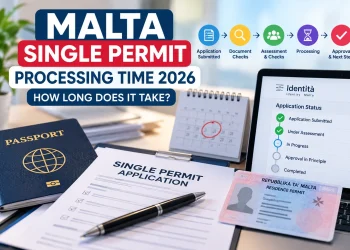
How Long Does a Malta Single Permit Take?
This is one of the most common questions:
How long will my Malta work permit take?
There is no guaranteed short processing time.
Under the Single Permit framework, processing may take up to four months.
Identità currently says the average is closer to approximately two months when an application has been submitted with all required documentation.
That distinction is important.
An incomplete application can create delays.
Processing may also depend on checks involving other authorities.
If somebody promises that every application will be approved in a few days, treat that claim carefully.
Can You Work While Waiting for the Permit?
Do not assume that a submitted application automatically gives you permission to work.
A job offer, application reference number or pending application is not by itself unrestricted authorisation to begin employment.
Identità states that a non-EU worker can start employment after receiving the appropriate official documentation authorising work, such as the applicable Interim Receipt/temporary work authorisation or residence document.
The exact position depends on the application and the documentation issued to you.
If you are unsure whether you are legally authorised to begin working, verify it before your first working day.
Approval in Principle for Applicants Abroad
If you are applying while outside Malta, you may hear the term Approval in Principle, often shortened to AIP.
An AIP is an important stage, but it should not be misunderstood as the final residence card.
Depending on your nationality, you may also need the appropriate visa to travel to Malta.
After arriving, further formalities such as document verification and biometrics may still be required.
Follow the instructions issued specifically with your approval.
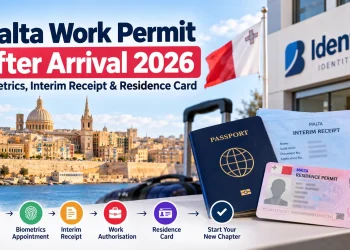
Biometrics and Residence Card
Applicants normally need to complete the required identity and biometric procedures before the residence documentation is finalised.
Bring the original documents requested by Identità.
Do not assume that uploading a PDF during the online application means you will never need to present the original document.
Once the process is completed and the application is approved, the residence document confirms the legal basis of your stay and employment in Malta.
Your Single Permit Is Connected to Your Employer
This is extremely important.
A Malta Single Permit is not an open work permit.
You generally cannot receive a Single Permit through Company A and then simply start working for Company B using the same permit.
The permit is connected to the approved employment.
It also does not automatically authorise you to perform unrelated paid work for other businesses.
If you want to change employer, the proper Change of Employer procedure must be followed.
Changing Employer in Malta
Changing jobs as a TCN requires more planning than simply resigning on Friday and starting a new job on Monday.
If you move to another employer, the correct change-of-employer application must be submitted.
Current rules also provide a limited grace period in certain circumstances following termination of employment.
For employment terminations falling under the rules introduced from August 2025, a worker may have an initial 30-day period to seek new employment, with a possible additional 30 days where the required financial self-sufficiency conditions are met.
This should not be treated as permission to ignore your immigration status.
If your employment ends, act immediately.
Do not wait until the final days of your legal stay to begin searching for information.
What If Your Job Title Changes?
Your designation also matters.
If you stay with the same employer but move into a different role, you may still need a Change in Designation application.
Identità currently lists the standard change-of-designation fee as €300, with different fees applying to certain health and care occupations.
Failure to notify Identità about an applicable change of employer or position can put the residence permit at risk.
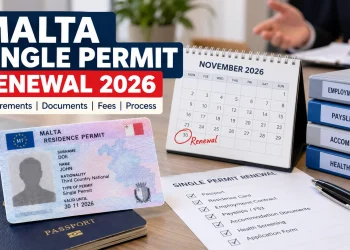
Renewing a Malta Single Permit
Single Permits are generally renewed periodically, commonly annually.
Do not wait for the card to expire before thinking about renewal.
Identità recommends beginning the renewal process around 90 days before expiry to allow sufficient processing time.
There are circumstances, including certain health-screening cases, where the timing of submission can differ.
Most importantly, the renewal should be submitted while the existing permit is still valid.
Allowing your residence permit to expire can create serious immigration problems.
What Happens If You Lose Your Job?
Your employment is one of the main conditions supporting your Single Permit.
Therefore, losing or leaving the job can affect your right to remain under that permit.
Current rules provide a limited period in qualifying circumstances to look for another employer.
But this is not unlimited.
If your employment ends:
- Find out immediately when your termination was officially registered.
- Check your current immigration status.
- Start searching for an eligible employer immediately.
- Make sure the new employer understands the Change of Employer process.
- Do not work for the new company until you have the appropriate authorisation.
Keep copies of your termination documents and all correspondence relating to your permit.
Can You Have a Second Job?
A Single Permit normally authorises the specific employment for which it was issued.
It does not automatically give you permission to work a second part-time job.
A TCN already in primary employment who wants additional part-time employment may need a separate Secondary Employment Licence from Jobsplus.
Do not assume that because you have a valid Maltese residence card you can work anywhere you want.
Single Permit vs Employment Licence
Not every non-EU worker uses the Single Permit procedure.
Certain categories of workers may instead require a separate employment licence or another residence route.
Examples can include some:
- temporary workers;
- students;
- service providers;
- self-employed persons; and
- other special categories.
Your correct permit depends on your actual circumstances.
Common Single Permit Mistakes
Many problems can be avoided by checking documents carefully before submission.
Common mistakes include:
Applying with an expiring passport
Check the required passport validity before the application starts.
Different job titles on different documents
Your contract should not say one position while another document describes a completely different job.
Incomplete accommodation documents
Make sure the landlord, address, signatures and required declarations are correct.
Assuming the application gives immediate permission to work
Wait until you have the appropriate authorisation.
Ignoring emails from the authorities
Check your email regularly, including the spam folder.
Letting the permit expire before renewal
Start preparing well before expiry.
Changing employer without following the correct procedure
Your permit is tied to approved employment.
Trusting unofficial information
Rules change.
A YouTube video or Facebook comment from two years ago may no longer reflect Malta’s current system.
A Simple Malta Single Permit Checklist
Before the application is submitted, check that you have considered:
- Genuine job offer from an eligible Maltese employer
- Employer registered with Jobsplus
- Employer recruitment/advertising requirements
- Pre-Departure Course requirements
- Sector-specific requirements, if applicable
- Valid passport
- Full passport copy
- Signed Europass CV
- Employment contract
- Required qualifications and recognition
- Health insurance
- Health screening, where applicable
- Accommodation documents
- Lease/landlord declarations where applicable
- Correct personal details
- Required application fee
Your exact checklist may be different, so use the official checklist applicable to your application.
Frequently Asked Questions
Can I apply for a Malta Single Permit myself?
Normally, the prospective Maltese employer submits the Single Permit application on behalf of the third-country national.
How much is a first-time Malta Single Permit in 2026?
The current standard first-time application fee is €600.
How long does the Malta Single Permit take?
The legal processing framework allows up to four months, while Identità states that the average processing time is closer to approximately two months for applications submitted with all required documents.
Can I work immediately after submitting my application?
No. Submitting an application does not automatically give unrestricted permission to start working. You need the appropriate official work authorisation/documentation.
Can I change employer with my existing Single Permit?
You cannot simply move to another employer using the existing permit without following the required procedure. A Change of Employer application is required.
Do first-time applicants need the Pre-Departure Course in 2026?
The Pre-Departure Course became an important requirement for applicable first-time Single Permit applicants in 2026. Identità began verifying the required certification from 1 March 2026, subject to the applicable rules and exemptions.
How early should I renew my permit?
Identità recommends starting the renewal process around 90 days before expiry, although specific circumstances can affect when the application may actually be submitted.
Is a Malta Single Permit permanent residence?
No.
The Single Permit is a temporary employment-based residence permit. Long-term residence is a different status with separate eligibility requirements.
Final Thoughts
For thousands of third-country nationals, the Single Permit is the main route to legally living and working in Malta.
But in 2026, the process involves more than simply finding a job and uploading a passport.
Applicants and employers need to understand the current recruitment requirements, Pre-Departure Course, documentation rules, fees and employment restrictions.
The most important thing is to prepare early.
Make sure your job is genuine, your employer understands the procedure, your documents match each other, and you know exactly what your permit allows you to do.
Once you receive your permit, continue paying attention to your expiry date, employer, job designation and registered residential address.
Your immigration status in Malta depends on keeping those details properly updated.
Disclaimer: This article provides general information and does not constitute legal or immigration advice. Malta’s immigration and employment rules can change. Always verify the latest requirements directly with Identità, Jobsplus and other relevant Maltese authorities before making an application or employment decision.