If you are a non-EU citizen planning to work in Malta in 2026, understanding the work visa and work permit process before travelling is extremely important.
One of the most common sources of confusion is the term “Malta work visa.”
For many third-country nationals (TCNs) taking up long-term employment in Malta, there are actually different parts of the process.
The Single Permit is normally the combined residence and employment authorisation, while people who require a visa to travel to Malta may also need an employment D-visa after receiving the appropriate approval.
In other words:
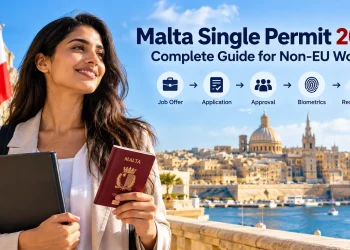
Job offer → employer starts the work-permit process → Single Permit assessment → Approval in Principle where applicable → employment D-visa if required → travel to Malta → biometrics/final requirements → residence card and employment
This guide explains the process step by step, including the 2026 requirements, documents, fees, Pre-Departure Course, processing times and important mistakes to avoid.
Important: Immigration rules depend on your individual situation, nationality, type of employment and immigration status. Always verify the latest requirements directly with Identità and Jobsplus before applying or travelling.
What Is a Malta Work Visa?
People often use the phrase “Malta work visa” to describe the entire process of obtaining permission to move to Malta for employment.
Legally, however, a visa and a work/residence permit are not necessarily the same thing.
For many non-EU workers coming to Malta for employment lasting more than six months, the main authorisation is the Single Permit.
The Single Permit combines:
- permission to reside in Malta; and
- authorisation to work for the approved employer and in the approved employment.
If you are abroad and your nationality or circumstances require a visa to enter Malta for employment, you may also have to obtain a national employment D-visa.
Therefore, receiving a job offer by itself does not automatically give you permission to travel to Malta and start working.
Who Is Considered a Third-Country National in Malta?
A third-country national, commonly shortened to TCN, generally means someone who is not a citizen of the EU, EEA or Switzerland for the purposes relevant to these employment rules.
Many workers coming to Malta from countries such as:
- India
- Nepal
- Bangladesh
- Pakistan
- the Philippines
- Sri Lanka
- Serbia
- Albania
- Turkey
- and numerous other non-EU countries
may therefore need employment and residence authorisation.
The exact procedure can vary according to nationality and immigration status.
Malta Work Visa 2026: Step-by-Step Process
Step 1: Find a Genuine Job in Malta
For the standard Single Permit route, you normally need a job offer from an employer registered and operating in Malta.
The prospective employer must also be registered with Jobsplus.
This is important because a third-country national normally cannot independently submit the standard Single Permit application.
The prospective employer submits the application on the worker’s behalf.
Be careful with fake job offers
Do not assume that a document is genuine simply because someone calls it an “offer letter.”
Before paying money to recruiters or intermediaries, check:
- the employer’s real company name;
- company contact details;
- the actual job position;
- salary;
- working hours;
- contract duration;
- workplace;
- who is responsible for the permit application; and
- whether the employer is genuinely operating in Malta.
Be particularly careful if somebody promises a “guaranteed Malta visa” in exchange for a large payment.
A private recruiter cannot guarantee that Maltese authorities will approve an immigration application.
Step 2: Employer Advertising Requirements
Malta introduced additional labour-migration requirements affecting employers recruiting third-country nationals.
For many New and Still Abroad Single Permit applications, the employer must first advertise the vacancy.
For standard roles, the vacancy generally needs to be advertised on:
- the Jobsplus portal, and
- EURES
for at least three weeks within the two months before the Single Permit application is submitted.
Certain categories have a reduced advertising period of two weeks, including some applications under:
- Key Employee Initiative (KEI);
- Specialist Employee Initiative (SEI);
- EU Blue Card; and
- Skilled Occupation List categories.
There are also exemptions for certain sectors and situations.
This part of the process is primarily the employer’s responsibility, but workers should understand that a company may not always be able to submit the permit immediately after offering the job.
Step 3: Complete the 2026 Pre-Departure Course
This is one of the most important changes for people applying to work in Malta in 2026.
Malta introduced a Pre-Departure Course for first-time Single Permit applicants.
The system launched in January 2026, and Identità began formally verifying the required certificates from 1 March 2026.
For applicable first-time, New and Still Abroad applications, the required certificate should therefore be obtained before the work-permit application is submitted.
What does the Pre-Departure Course include?
The main part contains two online learning modules:
- Living and Working in Malta
- Rights and Obligations at the Workplace
The course covers areas intended to prepare workers for employment and life in Malta.
Each module includes learning materials and an assessment.
Applicants also undergo an interview designed to verify matters including their understanding of the material and English-language ability.
How much does the Pre-Departure Course cost?
The official course fee is currently:
€250
How long do applicants have to complete it?
Official guidance states that candidates have up to 42 days to complete Part 1.
Tourism and hospitality workers
There are additional requirements for certain sectors.
Applicants working in tourism and hospitality may need both:
- the Pre-Departure Course Certificate; and
- the applicable Tourism & Hospitality Skills Pass certification.
Workers should therefore check their specific occupation rather than assuming that completing the general course is sufficient.
Step 4: Employer Starts the Single Permit Application
Once the applicable requirements are ready, the Maltese employer starts the Single Permit application through the Single Permit Online Portal.
The standard process works broadly as follows:
- Employer starts the application.
- Employer enters the required employment and applicant information.
- Supporting documents are uploaded.
- The prospective employee receives a link.
- The employee checks and confirms the information.
- The employer proceeds with final submission.
- The applicable fee is paid.
The worker should carefully check the information before confirming it.
Your:
- name;
- passport details;
- job title;
- employer;
- salary;
- and other personal information
should be accurate.
Errors can create delays later.
Documents Required for a Malta Work Permit
The exact checklist depends on the application category, but applicants should expect several important documents.
1. Passport
Identità’s current Single Permit guidance states that the passport should generally have at least eight months of remaining validity from the application date.
A copy of the whole passport, including blank pages, may be required in PDF format.
The original passport will also need to be presented when required by Identità.
2. Employment Contract
You will need an employment contract or other required employment documentation showing the terms of the job.
Check important information carefully, including:
- employer;
- job title;
- basic wage;
- working conditions;
- contract duration; and
- signatures.
Do not sign a contract you do not understand.
Keep your own copy.
3. Curriculum Vitae
Identità’s current guidance specifies a Europass-format CV.
The CV should be signed by the applicant.
Make sure your employment history and qualifications are accurate.
4. Qualifications
Depending on the job, you may need to provide:
- certificates;
- diplomas;
- degrees;
- professional qualifications;
- proof of experience; or
- formal recognition of qualifications.
Some qualifications may need recognition through the relevant Maltese authorities.
Requirements vary considerably depending on the occupation.
5. Health Insurance
Health-insurance requirements are important and should be checked against the exact Single Permit checklist that applies to your application.
Current Identità documentation for relevant Single Permit applications specifies health insurance with minimum coverage of €100,000, covering medical treatment including outpatient and hospitalisation treatment in Malta and, where necessary, other European countries.
For applicable first-year residence-permit applications, the required policy may need to cover the entire first year.
Do not buy insurance based only on what an agent tells you. Compare the policy against the current Identità checklist for your permit category.
6. Accommodation Documents
Accommodation documentation may also form part of the residence process.
Depending on the arrangement, documents can include:
- lease agreement;
- Housing Authority approval;
- Lease Agreement Attestation Form;
- Declaration of Accommodation; or
- other evidence of where you will live.
If you are renting a property, make sure the accommodation arrangement is genuine and properly documented.
7. Pre-Departure Course Certificate
For applicable first-time applications in 2026, you will need the required Pre-Departure Course Certificate.
Do not leave this until the employer is ready to submit the application.
8. Sector-Specific Documents
Some occupations have additional requirements.
Examples can include:
- Skills Pass;
- driving licence;
- professional licences;
- health screening;
- qualification recognition;
- sector-specific certificates; or
- other documents requested by Identità.
Always use the current checklist for your exact application type.
Step 5: Pay the Single Permit Fee
The current official fee for a first-time Single Permit is:
€600
The current renewal fee is:
€150 per year
The payment forms part of the application process.
Remember that the permit fee is not necessarily your total cost.
Depending on your situation, you may also have expenses for:
- Pre-Departure Course;
- D-visa;
- VFS services;
- insurance;
- document legalisation;
- certified translations;
- qualification recognition;
- travel;
- accommodation; and
- sector-specific requirements.
Step 6: Wait for the Single Permit Assessment
Submitting the application does not mean it has been approved.
The application can be reviewed by different Maltese authorities and stakeholders, including Identità and Jobsplus.
Jobsplus assesses relevant employment and labour-market aspects.
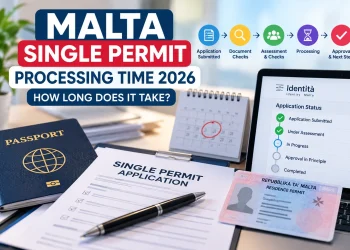
How long does a Malta Single Permit take?
Maltese legislation allows up to four months for processing.
Identità states that the average processing time is closer to two months when an application is submitted with all the required documentation.
That is not a guaranteed processing time.
Applications can take longer if:
- documents are missing;
- additional information is requested;
- checks are required;
- employer requirements have not been satisfied; or
- information is inconsistent.
Step 7: Receive the Approval in Principle
If the assessment reaches a positive stage, Identità may issue an Approval in Principle, commonly called the AIP letter.
Both the employer and the third-country national can receive it.
However, this is extremely important:
The AIP is not your residence card.
An Approval in Principle does not mean that the entire residence-permit procedure is finished.
The letter provides instructions for the next steps.
It can also be used by applicants who require a visa to proceed with the relevant visa application.
Step 8: Apply for the Malta Employment D-Visa if Required
If you need a visa to travel to Malta for your employment, the next stage may be the Malta national employment D-visa.
Current Identità guidance states that employment D-visa applicants should submit their visa application within the required validity window following issuance of the Approval in Principle.
Identità’s current visa FAQ specifically states that the employment D-visa application must be submitted within the first 60 days from the issue date of the AIP letter.
Do not wait until the AIP is about to expire.
Where is the D-visa application made?
Malta’s D-visas are processed through Identità’s Central Visa Unit.
Applicants can use the applicable VFS/Identità service and must follow the current instructions for their location and visa category.
Malta Employment D-Visa Documents
The exact checklist should always be checked before your appointment.
For an employment visa of more than 90 days, current official documentation includes items such as:
- completed visa application form;
- valid passport;
- passport photograph;
- Approval in Principle letter;
- VFS appointment documentation;
- proposed flight itinerary;
- appropriate medical/travel insurance; and
- any other documents specified in the current checklist.
The employment-visa insurance requirement should not be confused with the residence-permit insurance requirement. They are separate stages and can have different specifications.
Always follow the latest visa checklist issued by the Central Visa Unit.
How Long Does the Malta D-Visa Take?
Identità states that the D-visa process may take up to eight weeks from the VFS appointment.
Paying for an earlier appointment service does not necessarily mean the actual visa decision will be processed faster.
Plan accordingly.
Do not resign from employment, book non-refundable travel or make other major commitments solely because somebody tells you the visa will be issued within a particular number of days.
Step 9: Travel to Malta
Once you have the correct permission and visa, where required, you can travel to Malta in accordance with the conditions issued to you.
Keep important documents easily accessible while travelling, including:
- passport;
- visa;
- Approval in Principle;
- employment documentation;
- accommodation information;
- insurance documentation; and
- any other documents required for entry.
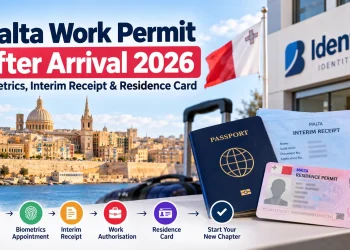
Step 10: Biometrics and Residence Card
The Approval in Principle provides instructions regarding the remaining procedure, including the biometric appointment where applicable.
At the appointment, applicants may need to present original documentation that had previously been uploaded.
Biometric information is then collected as part of the residence-card process.
Follow the instructions in your AIP carefully because missing documents can create further delays.
Step 11: When Can You Actually Start Working?
This is one of the most important questions.
An application submission alone does not automatically give you permission to work.
Do not assume:
“My employer applied, so I can start working.”
You need the appropriate authorisation before legally taking up employment.
The precise point at which work can begin can depend on the applicant’s circumstances and the authorisation issued.
If Identità issues an interim receipt that explicitly includes a Temporary Authorisation to Work, and the other applicable employment-registration requirements are met, employment may be possible under those conditions.
If you are unsure, confirm your status with Identità/Jobsplus before starting work.
Working without the required authorisation can create serious immigration and employment problems.
Step 12: Jobsplus Employment Registration
Jobsplus is an important part of Malta’s employment system.
Once the appropriate permit/authorisation has been issued, the employer must comply with the applicable Jobsplus employment-registration requirements, including the engagement process.
Workers should keep copies of their:
- contract;
- residence documentation;
- payslips;
- tax records; and
- employment information.
Is the Malta Work Permit Tied to Your Employer?
For the standard Single Permit route, yes.
The permit is linked to the:
- approved employer; and
- approved job/designation.
You cannot simply use the same permit to start working for another company.
If your employer or designation changes, the appropriate new application must be made.
Can You Change Employer in Malta?
Yes, but you must follow the official Change of Employer procedure.
A new employer can submit the relevant application.
Do not simply leave one employer and start working for another company using your old permit.
The current official fee for a standard Change of Employer application is €600.
For a more detailed explanation, read our guide:
Changing Employer in Malta as a TCN: Practical Guide
What Happens If You Lose Your Job?
This is particularly important for TCN workers because your Single Permit is linked to employment.
Under rules applying to relevant terminations from 1 August 2025, Single Permit holders have an initial 30-day grace period to remain in Malta and seek new employment.
A further 30-day extension may be possible where the applicable financial self-sufficiency conditions are met.
That can provide a potential total period of up to 60 days, subject to the applicable rules.
Do not interpret this as permission to work automatically for another employer.
A new employer still needs to follow the correct Change of Employer procedure.
If your employment ends, act immediately rather than waiting until the end of the grace period.
How Long Is a Malta Single Permit Valid?
Many Single Permits are issued for one year.
However, some circumstances may qualify for permits covering longer periods.
The duration depends on the application, employment arrangement and applicable rules.
Never assume that your permit automatically renews.
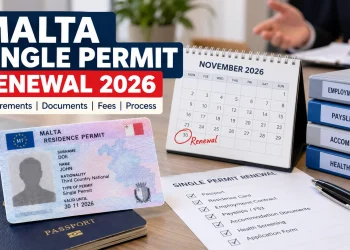
Malta Work Permit Renewal
If you intend to continue working in Malta, the renewal process should be handled before the permit expires.
Current Identità guidance states that renewal applications can be submitted up to 90 days before expiry.
The current standard renewal fee is:
€150 per year
Do not leave renewal until the final days of your permit.
Your employer and you should prepare the necessary documentation early.
Can You Work a Second Job?
A standard Single Permit does not automatically give you unrestricted access to every employer in Malta.
If you want to take additional part-time employment while retaining your primary job, a Secondary Employment Licence may be required through Jobsplus.
Always obtain the correct authorisation before beginning secondary employment.
Can You Apply for a Malta Work Visa Without a Job Offer?
For the normal employer-sponsored Single Permit route, you need a qualifying employment offer.
The prospective Maltese employer normally starts the application.
Be suspicious of advertisements claiming:
“Malta work permit without employer — guaranteed.”
There may be other immigration categories for particular circumstances, but they should not be confused with the normal employer-sponsored Single Permit route.
Can You Enter Malta as a Tourist and Change to a Work Visa?
Do not assume this is possible.
Identità specifically states that the Central Visa Unit cannot simply change the purpose of a Type C visit visa into an employment visa.
If your intention is employment and the applicable procedure requires you to apply from abroad, you may need to leave the Schengen Area and follow the correct Single Permit and employment D-visa procedure.
Visa-exempt nationals also have specific rules governing when applications may be submitted and whether they can remain in Malta while the application is processed.
Always check your individual situation before travelling.
Malta Work Visa 2026 Costs
The exact total depends on your circumstances, but some major official costs currently include:
First-time Single Permit: €600
Single Permit renewal: €150 per year
Change of Employer: €600
Pre-Departure Course: €250
There can also be separate costs for the national D-visa/VFS process, where required.
Additional personal expenses can include:
- insurance;
- translations;
- legalisation or apostille;
- qualification recognition;
- Skills Pass;
- travel;
- medical requirements; and
- accommodation documentation.
Therefore, avoid thinking of the €600 Single Permit fee as the total cost of relocating to Malta.
Common Malta Work Visa Mistakes
1. Paying for a fake job
Never assume an agent is genuine simply because they have a website, WhatsApp number or professional-looking documents.
Verify the employer independently.
2. Travelling before the correct approval
A job offer is not the same as immigration permission.
Follow the procedure applicable to your nationality and status.
3. Starting work while the application is pending
A pending application by itself does not automatically authorise employment.
Wait until you have the appropriate work authorisation.
4. Ignoring the 2026 Pre-Departure Course
First-time applicants should check this requirement before the employer is ready to submit the application.
For applicable applications from 1 March 2026, Identità verifies the certificate as part of the process.
5. Submitting incomplete documents
Missing or incorrect documentation can delay the application.
Use the latest official checklist rather than an old checklist downloaded from social media.
6. Assuming the AIP is the final permit
The Approval in Principle is not the residence card.
There are still additional steps to complete.
7. Changing employers without permission
Your Single Permit is linked to your approved employer and designation.
A proper Change of Employer application is required.
8. Using outdated information
Malta’s labour migration system has changed significantly.
Always check publication dates when reading online advice.
A guide from 2023 or 2024 may not accurately describe the process in 2026.
Simple Malta Work Visa 2026 Checklist
Before starting your journey, use this basic checklist:
Before the application
☐ Find a genuine Malta employer
☐ Receive a proper employment offer/contract
☐ Check employer eligibility and vacancy-advertising requirements
☐ Check whether you need the Pre-Departure Course
☐ Complete the course/certification where applicable
☐ Prepare your passport
☐ Prepare your signed Europass CV
☐ Prepare qualifications and supporting documents
Single Permit stage
☐ Employer submits the application
☐ Check the application details carefully
☐ Confirm your part of the online application
☐ Submit all required documents
☐ Pay the applicable fee
☐ Monitor the application status
After a positive assessment
☐ Read the Approval in Principle carefully
☐ Check whether you need an employment D-visa
☐ Apply within the required AIP/visa deadline
☐ Attend the VFS appointment if applicable
☐ Wait for the visa decision before travelling where required
After arriving in Malta
☐ Follow Identità instructions
☐ Attend biometrics when required
☐ Present original documents
☐ Complete accommodation requirements
☐ Obtain/collect your residence documentation
☐ Make sure you are legally authorised before starting work
☐ Make sure the employer completes applicable Jobsplus registration
Frequently Asked Questions
How much is the Malta work permit in 2026?
The current first-time Single Permit application fee is €600. Other costs may apply, including the €250 Pre-Departure Course, visa/VFS charges where applicable, insurance and document-related expenses.
Do I need a job before applying for a Malta work permit?
For the normal Single Permit employment route, yes. You need a qualifying job offer from an employer in Malta, and the employer normally submits the Single Permit application on your behalf.
Can I submit the Single Permit application myself?
For the standard route, the prospective employer submits the application on behalf of the TCN. The applicant then receives a link to review and confirm the submitted information.
How long does the Malta work permit take?
The legal processing period can be up to four months. Identità states that the average is closer to two months for complete applications, but individual processing times vary.
Is the Pre-Departure Course mandatory in 2026?
For applicable first-time Single Permit applications, yes. Identità began verifying the requirement from 1 March 2026. There are exemptions and additional sector-specific requirements, so applicants should check their exact category.
How much is the Malta Pre-Departure Course?
The official course fee is currently €250.
Does an Approval in Principle mean my Malta work permit is finished?
No. The AIP is an important positive stage, but it is not a substitute for the residence permit. Applicants still need to follow the instructions for visa, biometrics and remaining requirements where applicable.
Can I work immediately after applying?
No. Submitting an application alone does not automatically give you permission to work. You need the appropriate authorisation.
Can I change jobs after receiving my Malta work permit?
Yes, but you cannot simply transfer the existing permit yourself. The new employer needs to follow the official Change of Employer procedure.
Can I work for two employers?
A standard Single Permit does not automatically authorise unrestricted secondary employment. A Secondary Employment Licence may be required for additional part-time work.
Final Thoughts
Working in Malta can provide valuable opportunities for non-EU citizens, but the immigration process needs to be handled correctly.
In 2026, the safest way to approach the process is step by step:
Find a genuine employer → complete applicable pre-departure requirements → employer applies for the Single Permit → wait for the official decision/AIP → complete the employment visa process if required → travel legally → complete biometrics and residence requirements → start work only when properly authorised.
Do not rely entirely on recruiters, friends, Facebook groups or old YouTube videos.
Malta’s employment-migration rules have changed, particularly with the introduction of the 2026 Pre-Departure Course and updated labour-market requirements.
Always compare the information you receive with the latest guidance published by Identità, Jobsplus and the relevant Maltese authorities.
Related NoneuMalta Guides
If you are planning to work and live in Malta, continue with these guides:
Malta Single Permit 2026: Complete Guide for Non-EU Workers
Changing Employer in Malta as a TCN: Practical Guide
Social Security & Tax Numbers in Malta: TCN Guide
Healthcare in Malta for Non-EU Workers: Practical Guide
Malta Lease Attestation Form for TCNs: What to Know
Changing Your Address in Malta as a TCN: 2026 Guide
Disclaimer: This article is for general informational purposes and does not constitute legal or immigration advice. Requirements, fees and procedures can change. Always verify your individual circumstances and the latest requirements directly with Identità, Jobsplus, the Central Visa Unit and other relevant Maltese authorities before applying.